EV Charging GuideEV Models & SpecsWhat Onboard Charger Power Means and Why It Matters for EV Charging
What Onboard Charger Power Means and Why It Matters for EV Charging
Learn how your EV's onboard charger converts AC to DC, why ratings range from 7 kW to 22 kW, and how this single spec controls your home and public AC charging speed.
Try it with your car
Use our free calculator to simulate your exact charging time and cost.
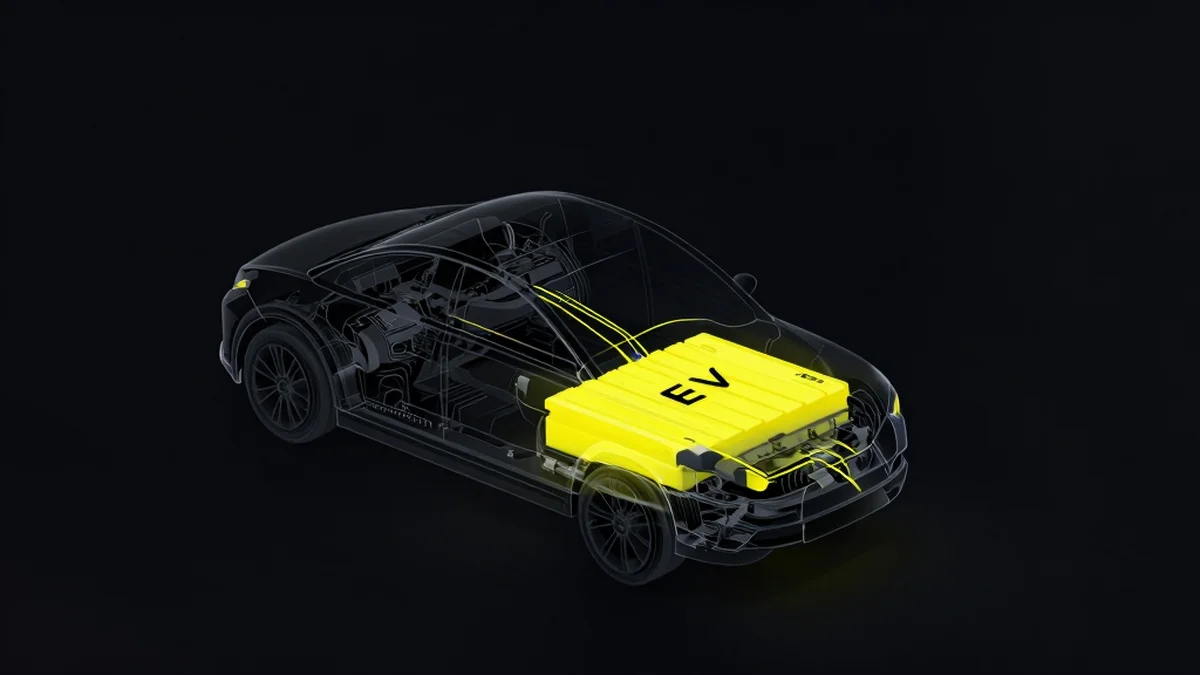
Every electric vehicle contains a built-in component called the onboard charger (OBC). Despite the name, it is not a charger in the traditional sense -- it is an AC-to-DC converter. When you plug into a home outlet, wallbox, or public AC charging station, the electricity delivered is alternating current. Your car's battery, however, stores energy as direct current. The onboard charger bridges that gap, converting AC into DC at a rate measured in kilowatts.
What Onboard Charger Power Means and Why It Matters for EV Charging
The onboard charger is a physical module with a fixed maximum power rating. No matter how powerful the AC source is, your car will never draw more than the OBC allows. If your wallbox can deliver 22 kW but your OBC is rated at 11 kW, you will charge at 11 kW. This makes the OBC the bottleneck for every AC charging session.
Manufacturers choose OBC ratings based on cost, weight, and market expectations. A higher-rated OBC adds expense and weight, which is why many entry-level trims ship with smaller units. Understanding this component is key to choosing the right home charging setup and avoiding overspending on a wallbox your car cannot fully utilise.
Common Onboard Charger Ratings: 7 kW, 11 kW, and 22 kW
Most EVs sold in Europe today come with one of three onboard charger ratings. The 7 kW (or 7.4 kW) single-phase unit is the entry-level option, found in cars like the base Peugeot e-208 and Fiat 500e. It draws up to 32 A on a single phase at 230 V. On a 7.4 kW wallbox, it will add roughly 40-45 km of range per hour of charging.
The 11 kW three-phase charger is the most common standard today, fitted to the Tesla Model 3, VW ID.3, Renault Scenic, and many others. It draws about 16 A per phase across three phases. With a compatible three-phase wallbox, you get approximately 65 km of range per hour -- enough to fully recharge most 60-80 kWh batteries overnight in 6-8 hours.
The 22 kW three-phase charger is the premium tier, available on the Renault Scenic (optional), MG4, and some Mercedes models. It draws 32 A per phase and can add around 130 km of range per hour. This makes a real difference at public AC chargers in cities, where a lunch stop can recover 50-60 % of a mid-size battery. At home, however, you need a 22 kW wallbox and a sufficiently rated three-phase electrical panel to benefit.
Impact on Home and Public AC Charging Speed
Your onboard charger rating directly determines how fast every AC charging session goes. At home, most European households have either a single-phase or three-phase connection. With a single-phase connection (common in France, UK, Italy), the maximum wallbox output is typically 7.4 kW, so an 11 kW or 22 kW onboard charger provides no advantage -- you are limited by the supply. With three-phase (common in Germany, Belgium, Switzerland), you can install an 11 kW or 22 kW wallbox and use the full OBC rating.
The math is simple: divide your usable battery capacity by the effective charging power to get the approximate charge time. A 60 kWh battery on an 11 kW OBC takes about 5.5 hours from 10-100 % (accounting for ~8 % AC efficiency loss). The same battery on a 7 kW OBC takes roughly 9 hours. If you only charge overnight, both get the job done. But if you arrive home at 8 PM and need a full battery by 6 AM, the 7 kW charger cuts it close on larger batteries.
At public AC destinations -- shopping centres, hotels, restaurants -- chargers are typically rated at 11 kW or 22 kW. If your car only has a 7 kW OBC, you will recover less range during a 2-hour shopping trip than someone with an 11 kW unit. For urban drivers who rely heavily on public AC charging, a higher OBC rating can be as important as DC fast-charging speed.
Why Onboard Charger Power Does Not Affect DC Fast Charging
DC fast chargers (CCS, CHAdeMO) bypass the onboard charger entirely. When you plug into a 150 kW or 300 kW DC station, the charger itself performs the AC-to-DC conversion in an external cabinet. It sends direct current straight to the battery through the DC pins on the charging connector, and the onboard charger module is not involved at all.
This means a car with a 7 kW onboard charger can still accept 100 kW or more at a DC fast charger, as long as the battery management system (BMS) and battery pack support that rate. The Peugeot e-208, for instance, has a modest 7-11 kW AC onboard charger but accepts up to 100 kW DC. The two specs are completely independent.
The takeaway: do not confuse onboard charger power with DC fast-charging capability. When evaluating an EV for long-distance travel, focus on the DC charging curve and peak DC power. When evaluating it for daily home and destination charging, focus on the onboard charger rating and whether your electrical supply can match it. Plan EV Charge simulates both scenarios accurately, so you can see the real-world difference for any car in the database.