EV Charging GuideEV Models & SpecsVolkswagen ID.3 Pro S 77 kWh Charging Guide: Times, Speeds & Real-World Tips
Volkswagen ID.3 Pro S 77 kWh Charging Guide: Times, Speeds & Real-World Tips
Complete charging guide for the VW ID.3 Pro S with 82 kWh battery. DC fast charging up to 175 kW, detailed charging curve analysis, AC times, and practical ownership tips.
🇩🇪
Volkswagen ID.3 Pro S 77 kWh
Usable battery
77 kWh
Max AC
11 kW
Max DC
175 kW
Consumption
16.5 kWh/100km
Try it with your car
Simulate charging time and cost for your Volkswagen ID.3 Pro S 77 kWh now.
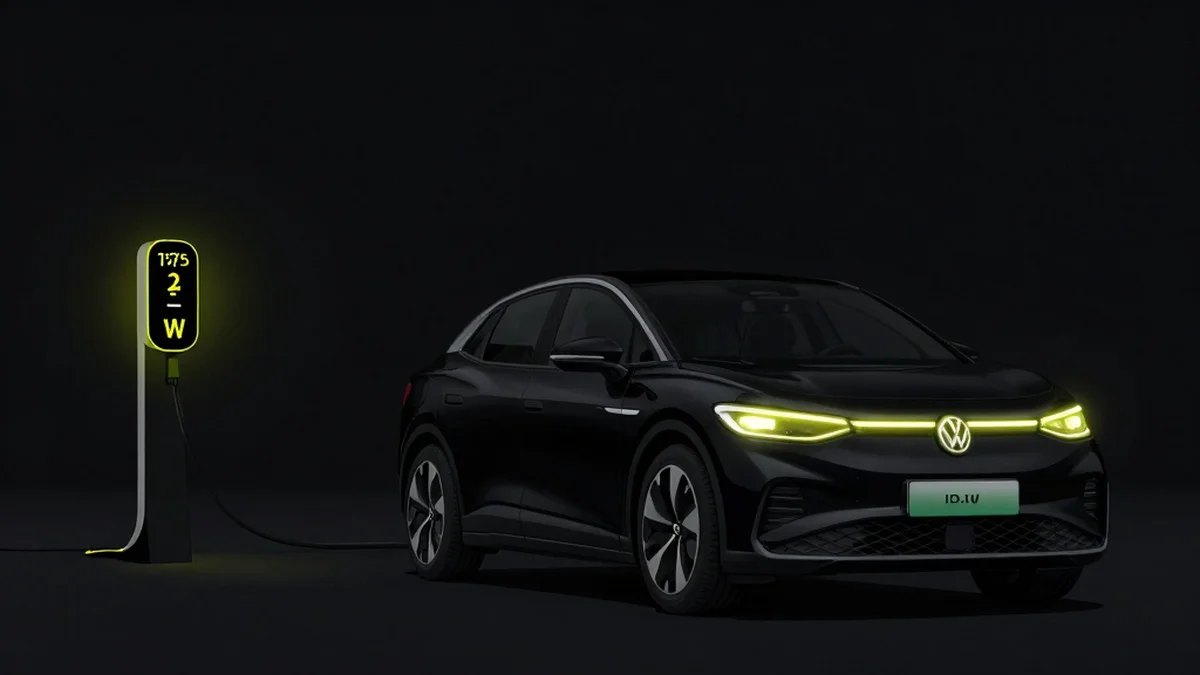
The Volkswagen ID.3 Pro S is the large-battery variant of VW's flagship electric hatchback, packing an 82 kWh gross battery (77 kWh usable) into the familiar ID.3 body. With consumption around 16.5 kWh/100 km, this translates to approximately 467 km of real-world range — enough for most long-distance trips with just one or two charging stops. The car supports 11 kW AC charging and up to 175 kW DC fast charging.
Charging Guide Vw Id3
Built on Volkswagen's MEB platform, the ID.3 Pro S benefits from a mature and well-optimized electric architecture. The 77 kWh usable capacity is among the largest in the compact hatchback segment, giving it a significant range advantage over smaller-battery competitors. This makes it a genuine alternative to combustion-engine cars for drivers who regularly cover 300+ km in a day.
The 175 kW DC fast charging is a major upgrade over earlier ID.3 variants and puts the Pro S in competitive territory with more expensive EVs. Combined with the large battery, this means fast charging stops can add enormous amounts of range in short periods. The ID.3 Pro S is particularly well-suited for owners who want a practical, affordable EV that can handle both daily commuting and occasional road trips with ease.
AC Charging Times: Home and Public Stations
The VW ID.3 Pro S's large 77 kWh usable battery means AC charging takes longer than smaller-battery EVs. On a standard 2.3 kW household outlet, a 10-80% charge requires approximately 24 hours, and a full 10-100% session takes around 31 hours. This makes outlet charging impractical as a primary solution — it's really only suitable as emergency backup or for topping up small amounts overnight.
With an 11 kW wallbox, the charging picture is far more practical. A 10-80% charge completes in roughly 5.5 hours, and a full 10-100% session takes about 7 hours. Plug in when you get home from work and you'll have a full battery by midnight. For the ID.3 Pro S specifically, a wallbox isn't just convenient — it's practically essential to make the most of the large battery. VW's ID. Charger wallbox integrates seamlessly with the We Connect app for scheduled charging.
At public AC stations, the ID.3 Pro S charges at a maximum of 11 kW. This adds approximately 65 km of range per hour of charging. For workplace or shopping center charging where you're parked for 3-4 hours, you'll recover about 200-260 km of range — a solid complement to overnight home charging.
DC Fast Charging: Curve and Performance
The VW ID.3 Pro S delivers impressive DC fast charging with a peak rate of 175 kW. The car reaches this maximum quickly, with full 175 kW available from around 5% SOC and sustaining this peak power through 20% SOC. This extended peak power zone is one of the ID.3 Pro S's strongest attributes — it means 15 minutes of charging in this range adds roughly 150-170 km of real-world range.
The charging curve maintains good power even as it begins to taper. Between 20-40% SOC, the car still delivers around 120-150 kW, and even at 50% SOC, speeds remain above 100 kW. A 10-80% DC fast charge completes in approximately 28-32 minutes under optimal conditions. The combination of a large battery and strong sustained power means the ID.3 Pro S adds range faster in absolute terms than many EVs with higher peak rates but steeper tapers.
For road trip charging strategy, the 5-20% SOC sweet spot at 175 kW is where you get the most range per minute. Arriving at a charger around 10% and charging to 60% gives you approximately 385 km of range added in about 20 minutes. If you need more, charging to 80% is still efficient. Beyond 80%, the rate drops significantly, so save that last 20% for overnight AC charging at your destination.
Real-World Charging Tips for the VW ID.3 Pro S
The ID.3 Pro S supports battery preconditioning via the navigation system. When you set a fast charger as your destination, the car begins heating or cooling the battery en route. This is especially important in winter, where cold-battery DC charging can be 30-40% slower. The We Connect app also allows remote preconditioning. Always use these features in temperatures below 10 degrees C for the best fast charging experience.
VW's software updates have progressively improved the ID.3's charging curve over time, so ensure your car is running the latest firmware. Early MEB platform cars had more conservative charging profiles that have since been optimized. The ID. app shows your car's current software version and available updates. Some owners have reported significant improvements in DC charging speed after OTA updates.
For daily use, set the charge limit to 80% through the car's infotainment or the We Connect app. The ID.3 Pro S at 80% still provides about 370 km of range — more than sufficient for virtually any daily routine. On highway trips at 120-130 km/h, expect consumption to rise to 19-21 kWh/100 km, giving a realistic highway range of 370-400 km. In winter, consumption can reach 21-23 kWh/100 km. The ID.3's heat pump helps mitigate cold-weather range loss, keeping it to around 20% rather than the 30-35% seen in EVs relying solely on resistive heating.
Frequently Asked Questions
Does the VW ID.3 support 11 kW or 22 kW AC charging?
The VW ID.3 Pro S accepts a maximum of 11 kW AC across all trims — there is no 22 kW option. Plugging into a 22 kW public station gives no advantage over an 11 kW one; the car draws 11 kW either way. An 11 kW home wallbox completes a 10–80 % charge in roughly 5.5 hours.
What DC fast charging speed can the VW ID.3 Pro S actually hold?
The ID.3 Pro S peaks at 175 kW and holds that peak from about 5 % to 20 % SOC. It tapers to 120–150 kW between 20 and 40 %, around 100 kW at 50 %, and falls more steeply above 80 %. Real-world peaks depend on battery temperature: in cold conditions without preconditioning, expect 10–15 % below the rated peak.
How long does the VW ID.3 Pro S take to charge from 10 to 80 %?
About 28–32 minutes on a 175 kW charger in good conditions. On a 150 kW charger the result is similar — the 150 kW limit only matters for the first ~20 % of the session, and above 40 % the car's natural taper drops below 150 kW anyway. Add 5–10 minutes if the battery is cold and was not preconditioned.
Does preconditioning help charging speed on the VW ID.3?
Yes, meaningfully so in cold weather. Routing to a fast charger via the built-in navigation — or remotely via the We Connect app — warms the battery into its optimal 25–35 °C window. In sub-5 °C conditions an unpreconditioned battery can charge at only 60–70 % of its rated peak, so preconditioning typically saves 5–10 minutes on a 10–80 % session.
Why does the VW ID.3 slow down after 80 %?
Above 80 % the charging rate drops below 50 kW to protect the battery from heat and degradation, so the last 20 % takes about as long as the previous 50 %. On road trips, stop at 60–80 % and move on; only charge to 100 % when the destination has no overnight charging.
What's the best charging strategy for a VW ID.3 road trip?
With ~467 km of real-world range — closer to 380–400 km on the motorway at 120–130 km/h — plan a stop every 280–320 km. Aim to arrive at fast chargers around 10–15 % SOC and charge to 60–70 %. The Plan EV Charge calculator includes the ID.3 Pro S's real charging curve and helps you compare a single 10–80 % stop against two shorter ones for total trip time.
Plan Your VW ID.3 Pro S Charges with Plan EV Charge
Plan EV Charge features the Volkswagen ID.3 Pro S 77 kWh with its complete DC charging curve data, including the strong 175 kW peak and subsequent taper profile. Select the ID.3 Pro S from the vehicle list to get precise charging time estimates that reflect the car's real-world performance at different states of charge.
The calculator is particularly useful for planning road trips with the ID.3 Pro S. Simulate your planned route by entering different starting and target SOC values to find the optimal charging strategy. For example, compare a single long 10-80% charge against two quick 10-50% stops — with the ID.3's strong peak power in the low SOC range, shorter stops are often more time-efficient overall.
Use the charger type selection to compare scenarios: a 150 kW charger versus a 175 kW charger makes a meaningful difference for the ID.3 Pro S since the car can actually use that extra power. The cost calculator helps you budget for trips, factoring in the real energy consumed including charging losses. For home users, comparing the 2.3 kW outlet versus 11 kW wallbox clearly shows why a wallbox is practically mandatory for the large-battery ID.3 variant.