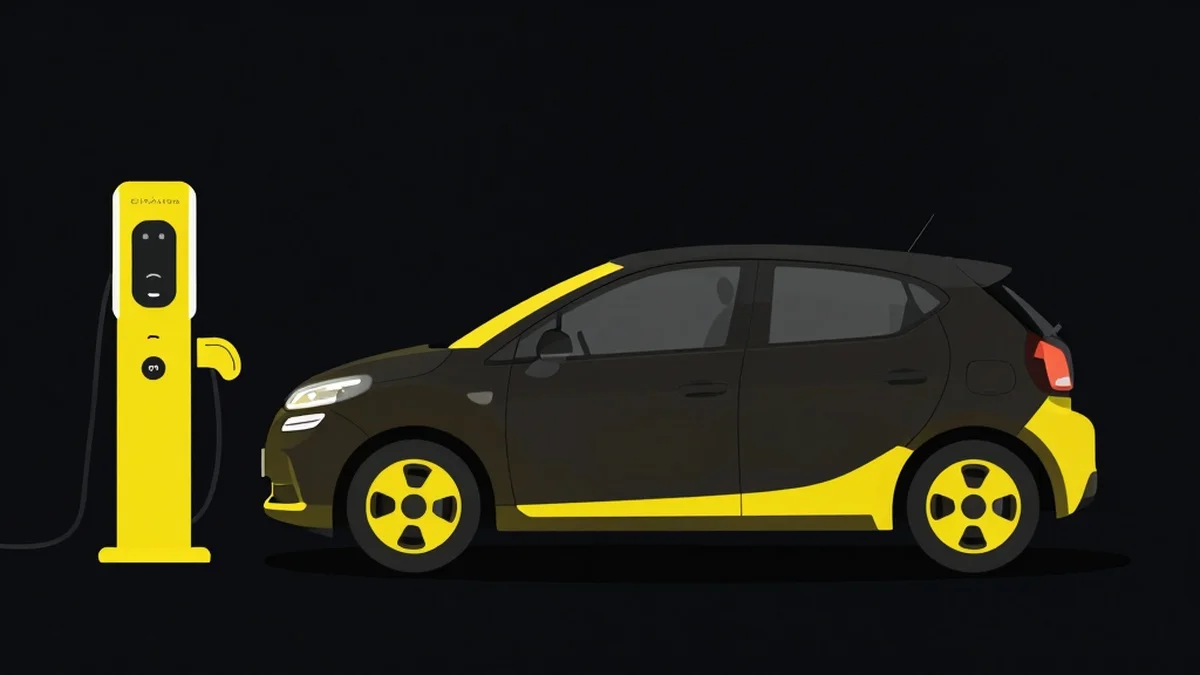
Complete charging guide for the budget-friendly Citroën ë-C3 with its 44 kWh battery. AC charging with 7 kW onboard charger, DC fast charging analysis, and money-saving tips.
🇫🇷
Citroën ë-C3
Usable battery
40 kWh
Max AC
7 kW
Max DC
100 kW
Consumption
15.5 kWh/100km
Try it with your car
Simulate charging time and cost for your Citroën ë-C3 now.
The Citroën ë-C3 is one of the most affordable electric cars in Europe, making EV ownership accessible to a much wider audience. With a 44 kWh gross (40 kWh usable) battery and an efficient 15.5 kWh/100 km consumption, it delivers approximately 258 km of real-world range — well-suited to urban and suburban driving patterns.
Charging Guide Citroen Ec3
The ë-C3's charging setup reflects its budget positioning. The onboard charger is limited to 7 kW AC, which is lower than the 11 kW found in many competitors. This means it cannot fully exploit 11 kW or 22 kW public AC chargers. On the upside, DC fast charging supports up to 100 kW, which is solid for a car in this price bracket and makes the ë-C3 capable of occasional longer journeys.
As Citroën's entry point to electric mobility, the ë-C3 is designed for buyers who primarily drive in urban environments and charge at home overnight. The smaller battery keeps the purchase price low while still offering enough range for most daily needs, and the 100 kW DC capability provides a safety net for those rare longer trips.
AC Charging Times: Home Outlet & Wallbox
From a standard 2.3 kW household outlet, the ë-C3's 40 kWh usable battery takes approximately 17-18 hours for a full 10-100% charge. For many ë-C3 owners who drive 50-80 km daily, this is actually workable — an overnight plug-in of 12 hours adds about 28 kWh or 180 km of range. The small battery makes outlet charging more practical than on larger EVs.
With a 7 kW wallbox — matching the ë-C3's maximum AC rate — a full 10-100% charge takes about 5 hours 45 minutes. This is the recommended home setup for the ë-C3 and is more affordable to install than an 11 kW three-phase wallbox, since 7 kW works on single-phase power. Plug in after work at 6 PM and you'll have a full battery by midnight.
At public AC stations, the ë-C3 will only draw 7 kW regardless of whether the station offers 11 kW or 22 kW. This is the car's main charging limitation — a 2-hour shopping stop adds about 14 kWh (90 km) rather than the 22 kWh you'd get with an 11 kW charger. Plan AC public charging sessions to be longer, or prioritize DC chargers when you need faster top-ups.
DC Fast Charging: Curve Performance & Session Times
The Citroën ë-C3 peaks at 100 kW DC around 20% SOC, which is competitive for a budget EV. The curve provides good initial performance, though power begins to taper as the battery fills. Expect the charging rate to gradually decrease above 30% SOC, settling to moderate levels as you approach 80%.
A 10-80% DC fast charge takes approximately 25-30 minutes at a 100 kW charger. The small 40 kWh battery actually works in your favor here — even though the peak power is modest compared to premium EVs, there's simply less energy to add. A quick 10-50% session takes about 15-18 minutes and adds roughly 115 km of range.
Since the ë-C3 caps at 100 kW, a standard 50 kW DC charger — which is much more commonly available at supermarkets and service stations — still provides a reasonable experience. A 10-80% session at 50 kW takes about 35-40 minutes. These chargers are often cheaper per kWh and less likely to be occupied, making them a smart choice for ë-C3 owners.
Real-World Charging Tips for the Citroën ë-C3
A 7 kW single-phase wallbox is the ideal home charging solution for the ë-C3 — and it's the most affordable wallbox option. There's no point installing an 11 kW or 22 kW charger since the car can't use the extra power. Many French energy providers offer installation deals around €500-800 after government subsidies, making the total cost of ownership very competitive.
For the occasional longer trip, plan DC stops at 50 kW or 100 kW chargers every 180-200 km. Arrive at the charger between 10-20% SOC to maximize the time spent at higher charging speeds. A Paris-to-Lyon drive (465 km) is comfortably doable with two 25-minute DC stops. Don't hesitate to use slower 50 kW chargers — the time difference is only about 10-15 minutes per stop.
The ë-C3's 15.5 kWh/100 km efficiency makes it very cheap to run. At home electricity rates of €0.15/kWh, a full charge costs around €6. Even at public DC rates of €0.40/kWh, a 10-80% session costs only about €11. To keep costs low, do 90% of your charging at home and reserve DC charging for road trips.
Simulate Your ë-C3 Charging Sessions with Plan EV Charge
Plan EV Charge includes the Citroën ë-C3's DC charging curve and its 7 kW AC limit, so simulations reflect the car's actual capabilities rather than theoretical maximums. Select the ë-C3, choose your charger, and get accurate time estimates that account for the onboard charger limitation.
The calculator is especially helpful for ë-C3 owners planning longer trips, where charging strategy matters most. Compare a 50 kW charger stop versus a 100 kW stop to see if the faster charger is worth a detour. With the ë-C3's small battery, the difference might be smaller than you think — saving you money on more expensive high-power chargers.
Build your road trip plan by adding multiple charging stops to your charge planner. The tool helps you find the optimal balance between driving time and charging time, taking into account the ë-C3's real-world range and charging curve. Plan with confidence knowing your time estimates are based on actual data.