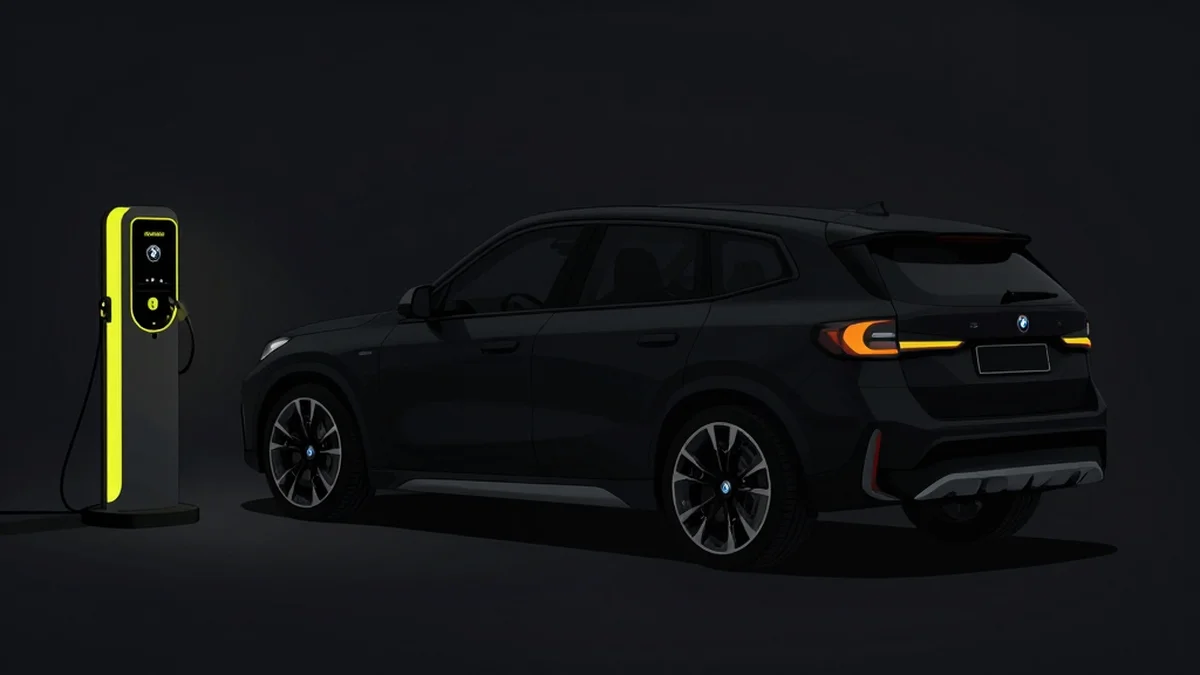
BMW iX1 xDrive30 Charging Guide: Times, Speeds & Real-World Tips
Complete charging guide for the BMW iX1 xDrive30 (66.5 kWh). Detailed AC and DC charging times, fast charging curve analysis, and practical tips for everyday and long-distance use.
🇩🇪
BMW iX1 xDrive30
Usable battery
64.7 kWh
Max AC
11 kW
Max DC
127 kW
Consumption
17 kWh/100km
Try it with your car
Simulate charging time and cost for your BMW iX1 xDrive30 now.
The BMW iX1 xDrive30 is a premium compact electric SUV with a 66.5 kWh gross battery (64.7 kWh usable) and all-wheel drive. Consuming approximately 17 kWh/100 km, the iX1 delivers a real-world range of around 380 km on a full charge. It supports 11 kW AC charging and up to 127 kW DC fast charging, placing it competitively in the premium compact SUV segment.
Charging Guide Bmw Ix1
BMW's fifth-generation eDrive technology in the iX1 provides refined power delivery and efficient energy management. The 64.7 kWh usable capacity is generous for a compact SUV, offering enough range for most daily routines plus weekend trips without range anxiety. The dual-motor all-wheel-drive setup does consume slightly more energy than single-motor alternatives, but the tradeoff in traction and driving dynamics is worthwhile for many buyers.
The iX1's charging architecture is well-balanced for both home and on-the-road use. The 11 kW onboard charger handles overnight charging efficiently, while the 127 kW DC capability means fast charger stops can add substantial range in under 30 minutes. BMW's charging ecosystem, including the My BMW app, adds convenient features for managing charge sessions and finding stations.
AC Charging Times: Home and Public Stations
Charging the BMW iX1 from a standard 2.3 kW household outlet is feasible for overnight use but requires patience. A 10-80% charge takes approximately 20 hours, while a full 10-100% session needs around 26 hours. This means you'll want to plug in as soon as you get home and leave it overnight and through the next morning. For owners who drive less than 80-100 km daily, even this slow rate can maintain a usable charge level with nightly sessions.
An 11 kW wallbox transforms the home charging experience for the iX1. The 10-80% charge drops to roughly 4.5 hours, and a complete 10-100% fill takes about 6 hours. Plug in at 7 PM and you'll have a full battery well before midnight. BMW's Connected Charging feature lets you schedule sessions to coincide with off-peak electricity rates, which is particularly valuable given the 64.7 kWh battery's appetite for energy.
At public AC chargers, the iX1 draws a maximum of 11 kW regardless of whether the station offers 22 kW. This is adequate for destination charging — shopping centers, restaurants, or workplaces — where you'll be parked for a few hours. Expect to gain about 60 km of range per hour of AC charging at 11 kW.
DC Fast Charging: Curve and Performance
The BMW iX1's DC charging curve is one of its strong points. The car ramps up remarkably quickly, reaching 126 kW by just 2% state of charge. This near-instant peak means you start receiving maximum power almost immediately after plugging in, which is excellent for time-pressed fast charging stops.
The iX1 holds this high charging rate well through the lower SOC range, maintaining strong power up to around 20% SOC before beginning a gradual taper. A 10-80% DC fast charge typically completes in approximately 29-32 minutes under good conditions. The consistent high power in the 2-20% range means the first 10-15 minutes of a charge session are especially productive, adding roughly 120-150 km of range.
Above 50% SOC, the taper becomes more noticeable, and charging slows progressively. For road trip efficiency, the optimal strategy is to arrive at chargers around 10-15% and charge to 60-70%. This keeps most of your charging time in the high-power zone. If you need to charge to 80%, expect the last 10% to take disproportionately longer. Overall, the iX1's fast and sustained ramp-up makes it one of the better performers in its class for real-world DC charging scenarios.
Real-World Charging Tips for the BMW iX1
The BMW iX1 supports battery preconditioning when you route to a fast charger through the navigation system. This feature heats or cools the battery to its optimal temperature range before arrival, which can boost DC charging speeds by 15-25% in cold weather. In winter, always use the built-in navigation to route to DC chargers rather than a third-party app to ensure preconditioning activates.
BMW's My BMW app allows you to set a default charge limit — keeping this at 80% for daily use is recommended for long-term battery health. The app also shows real-time charging status, remaining time, and lets you start or stop charging remotely. For the iX1's all-wheel-drive system, winter consumption can rise to 20-22 kWh/100 km, reducing effective range to around 300 km. Pre-conditioning the cabin while plugged in saves battery energy for driving.
When planning longer trips, note that the iX1's consumption on highways at 120-130 km/h typically rises to 19-21 kWh/100 km due to the SUV's aerodynamic profile. This means realistic highway range is closer to 310-340 km. Plan fast charging stops every 200-250 km to stay in the efficient SOC range and avoid arriving at chargers with less than 10% battery, which can trigger slower charging due to battery protection systems.
Plan Your BMW iX1 Charges with Plan EV Charge
The Plan EV Charge calculator features the BMW iX1 xDrive30 with its precise DC charging curve and battery specifications. Select the iX1 from the vehicle dropdown, input your starting and target SOC, and choose between home AC, wallbox, or DC fast charger to see accurate time and energy estimates tailored to this model.
Compare different charging scenarios side by side: see how a 10-80% session differs between a 2.3 kW outlet, an 11 kW wallbox, and a 127 kW DC charger. The calculator uses the iX1's actual charging curve data, including the fast ramp to 126 kW and subsequent taper, giving you realistic expectations rather than marketing numbers.
For trip planning, use the calculator to determine the most efficient stop strategy. You might find that two quick 10-50% charges are faster than one long 10-80% session, depending on charger availability along your route. The cost estimation feature also helps you budget for charging, whether you're comparing home electricity rates to public fast charging networks.