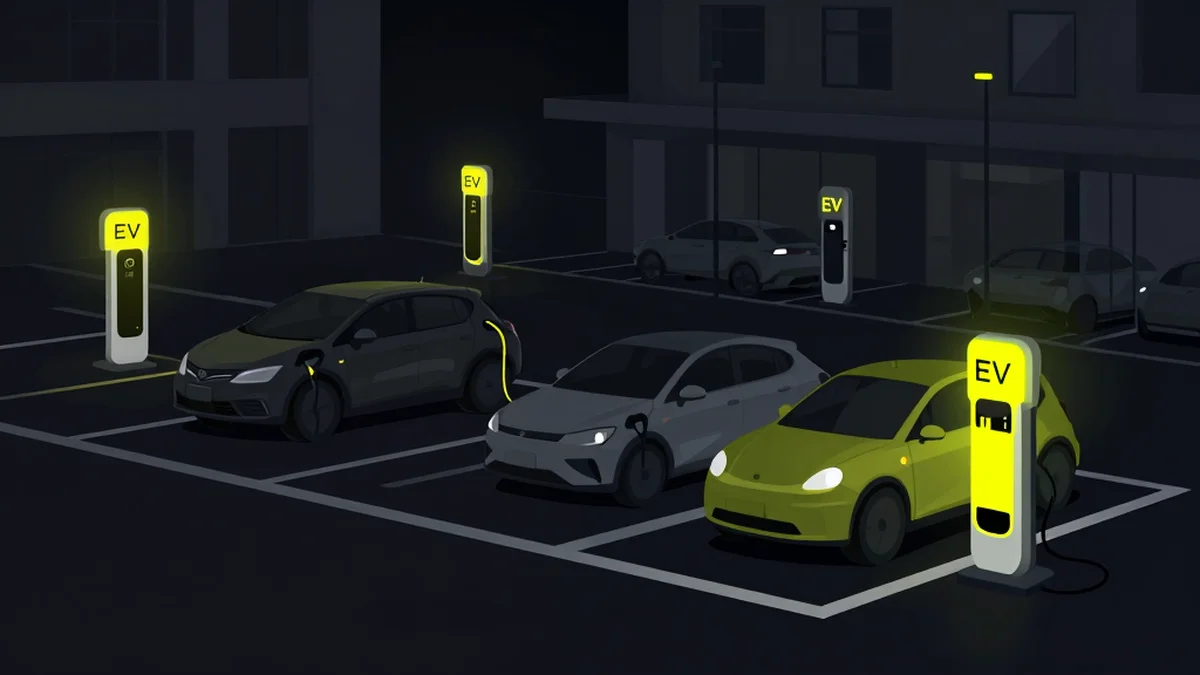
Workplace charging turns your daily commute into a charging opportunity. Instead of making dedicated stops at public chargers, your car charges passively while you work. For an average 8-hour workday, even a modest 7.4 kW charger adds roughly 55 kWh to your battery, enough to fully charge most EVs. This eliminates range anxiety entirely for daily commuters and means you can arrive home with a full battery ready for evening activities.
Charging at Work: Is It Worth It?
For employees without home charging, especially apartment dwellers, workplace charging can be transformative. It provides a reliable, predictable charging location that fits naturally into your daily routine. No apps to juggle, no waiting at public stations, no detours. The cost is often lower than public charging too: many employers offer free or subsidized charging as an employee benefit, and even metered workplace charging typically costs 0.15-0.25 euros/kWh compared to 0.40-0.70 euros/kWh at public fast chargers.
Workplace charging also makes EV ownership viable for two-car households where only one car has access to home charging. The second driver can rely on the office charger for daily needs, making the transition to an all-electric household significantly easier and more affordable.
Typical Workplace Charging Setups
Most workplace charging installations use AC chargers rated between 7.4 kW and 22 kW, with Type 2 connectors standard across Europe. A 7.4 kW station is the most common choice because it balances cost-effectiveness with practicality: during an 8-hour workday, it delivers roughly 55 kWh, which is more than enough for most daily commutes. Higher-power 11 kW or 22 kW stations charge faster but cost more to install and require three-phase power.
Shared charging stations are increasingly common in workplaces. With smart load management, a single electrical circuit can serve multiple charging points by distributing available power dynamically. For example, four 22 kW chargers sharing a 44 kW supply each deliver 11 kW when all four are occupied. As cars finish charging and unplug, the remaining vehicles automatically receive more power. This approach dramatically reduces infrastructure costs while serving more employees.
Some larger offices deploy charging management software that allows employees to queue for chargers, receive notifications when charging is complete, and even automatically bill usage to their accounts. The most advanced setups integrate with building energy management systems, reducing EV charging power during periods of high building demand and ramping it up when the building load is light.
Cost Comparison: Work vs Home vs Public Charging
The cost of charging at work varies widely depending on employer policy. Free workplace charging is the best deal available, effectively giving you fuel at zero cost. For a driver covering 15,000 km per year in a car consuming 17 kWh/100 km, free workplace charging saves roughly 750 euros annually compared to home charging at 0.30 euros/kWh, and over 1,500 euros compared to public fast charging at 0.60 euros/kWh.
When employers charge for electricity, rates typically fall between 0.15 and 0.25 euros/kWh, which is competitive with home charging on off-peak tariffs. Some companies bill at cost (their commercial electricity rate) without markup, while others add a small margin to cover equipment maintenance. Even at 0.25 euros/kWh, workplace charging costs roughly half of public AC charging (0.40-0.50 euros/kWh) and a third of DC fast charging (0.55-0.79 euros/kWh).
Use the Plan EV Charge calculator to compare the exact cost of charging your specific car at different power levels and prices. Input your workplace charger power (typically 7-22 kW), the electricity rate, and your daily SOC range to see the precise cost per charge session and monthly totals.
Employer EV Charging Programs and Incentives
Forward-thinking employers across Europe are launching EV charging programs as part of sustainability goals and employee benefits packages. These programs take several forms: fully subsidized charging (the employer absorbs the cost), partially subsidized (the employee pays a reduced rate), or cost-recovery (the employee pays the actual electricity cost with no markup). Each model has different tax implications depending on the country.
In many European countries, employer-provided EV charging carries tax advantages. In the UK, free workplace charging is a tax-exempt benefit. In Germany, employer-provided charging has been tax-free since 2017 through paragraph 3 Nr. 46 EStG. France offers companies tax deductions for installing charging infrastructure. These incentives make it financially attractive for employers to offer charging, which in turn makes EV ownership cheaper for employees.
If your employer does not yet offer EV charging, consider making the business case. Start by surveying EV and plug-in hybrid ownership among colleagues to demonstrate demand. Highlight the relatively low installation cost (3,000-8,000 euros for a four-station setup with load management), the tax benefits, and the positive impact on employee satisfaction and retention. Many utility companies and charging providers offer turnkey corporate solutions that handle installation, billing, and maintenance.